
Stay Connected on the Water Clearly
Marine communication system installation and troubleshooting for boaters throughout Boston.
You leave the dock in Boston and head into the harbor, but your VHF signal cuts out intermittently or you cannot reach the harbormaster on channel sixteen. Communication failures on the water create safety risks and make it difficult to coordinate docking, bridge openings, or weather updates. M.P. Marine Electrical and Electronics installs VHF radios, AIS transponders, and integrated communication networks that work reliably in the conditions you face around Boston Harbor and surrounding waters.
A communication system installation begins with antenna placement, which determines your range and signal clarity. Poor antenna location, corroded connections, or interference from other electronics can all degrade performance. In Boston, where salt exposure and tight marina layouts are common, proper mounting and cable routing prevent long-term signal issues. The installation includes VHF radio setup, AIS integration with your chartplotter, and network configuration so your communication devices share data with navigation and monitoring systems onboard.
M.P. Marine Electrical and Electronics provides dockside service across Boston for installation and troubleshooting.
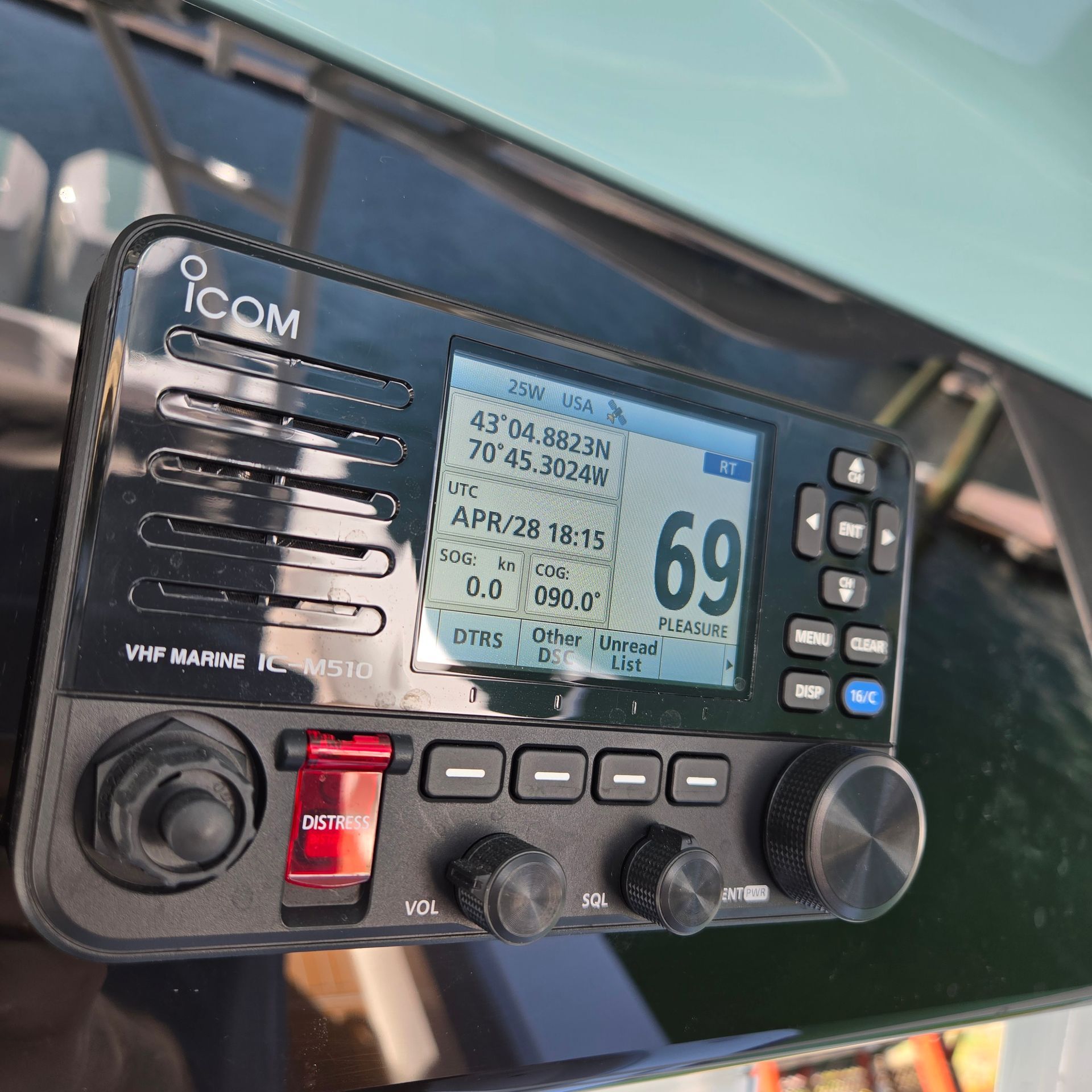
How Communication Systems Connect and Perform
The installation starts with evaluating your helm layout and determining the best location for your VHF handset, AIS display, and antenna mount. M.P. Marine Electrical and Electronics runs shielded coaxial cable from the radio to the antenna, ensuring the path avoids sharp bends and stays clear of high-current wiring that could introduce interference. In Boston, antennas are typically mounted on the hardtop, arch, or mast depending on vessel type and clearance requirements.
After installation, you will hear clearer transmissions with less static, and your AIS system will display nearby vessel traffic on your chartplotter in real time. If you previously struggled to reach the Coast Guard or other boats beyond a few miles, a properly installed antenna and radio will extend your effective range significantly. Your communication system will also integrate with your onboard NMEA network, allowing position data to be shared between devices without redundant GPS antennas.
System troubleshooting addresses weak signals, intermittent transmission issues, and failure to receive AIS data. Common causes include corroded antenna connectors, poorly grounded radios, or interference from LED lights and other electronics. M.P. Marine Electrical and Electronics tests signal strength at multiple points and corrects wiring or grounding faults to restore full functionality.
What Boaters Ask Before Installing Communication Gear
Boat owners in Boston often want to know about antenna placement, AIS functionality, and how to fix poor VHF performance before scheduling an installation.
What causes weak VHF signal strength on my boat?
Weak signals usually result from a corroded antenna connection, poor grounding, or an antenna mounted too low on the vessel. M.P. Marine Electrical and Electronics checks each connection and tests signal strength to identify the exact cause.
How does AIS improve safety while cruising Boston Harbor?
AIS displays the location, speed, and heading of nearby vessels on your chartplotter, even in fog or at night. You can see commercial traffic, ferries, and other AIS-equipped boats before they come into visual range, which helps you avoid close encounters in congested areas.
Why does my VHF radio work at the dock but not underway?
Intermittent performance often points to a loose antenna connection that vibrates open while the boat is moving, or interference from engine electronics. Testing under load while the engine runs helps isolate the problem.
What is the difference between a VHF radio and a handheld backup unit?
A fixed-mount VHF connects to an external antenna with much greater range and power output, while a handheld unit has a short rubber antenna and limited range. Handheld units work well as backups but should not be your primary communication tool.
How long does it take to install a VHF and AIS system?
Most installations take four to six hours depending on cable routing complexity and integration with existing navigation equipment. M.P. Marine Electrical and Electronics completes the work dockside in Boston so your boat stays in place.
M.P. Marine Electrical and Electronics installs and troubleshoots marine communication systems throughout Boston, including VHF radios, AIS transponders, and integrated helm networks. If your current setup is unreliable or you are adding new equipment, contact us to schedule dockside service.