
Power Your Boat With Less Weight
Lithium battery upgrades for vessels docked and cruising throughout Boston.
Your boat sits at the dock in Boston for weeks at a time, and when you return, the battery bank has dropped more than you expected. Lithium upgrades solve this by holding voltage longer, charging faster from your alternator or shore power, and reducing the total weight you carry on board. M.P. Marine Electrical and Electronics evaluates your current setup before recommending a replacement, so you know exactly what changes and what stays the same.
A lithium upgrade involves more than swapping the battery itself. Your alternator output, charging profile, and battery management system all need to align with the new chemistry. In Boston, where saltwater exposure and seasonal use are common, proper installation includes ventilation planning, connection protection, and system monitoring that reflects ABYC standards. If your boat runs high-draw electronics, trolling motors, or an inverter for extended off-grid use, lithium provides consistent power without the voltage sag you get from lead-acid under load.
M.P. Marine Electrical and Electronics offers dockside installation throughout Boston for your convenience.
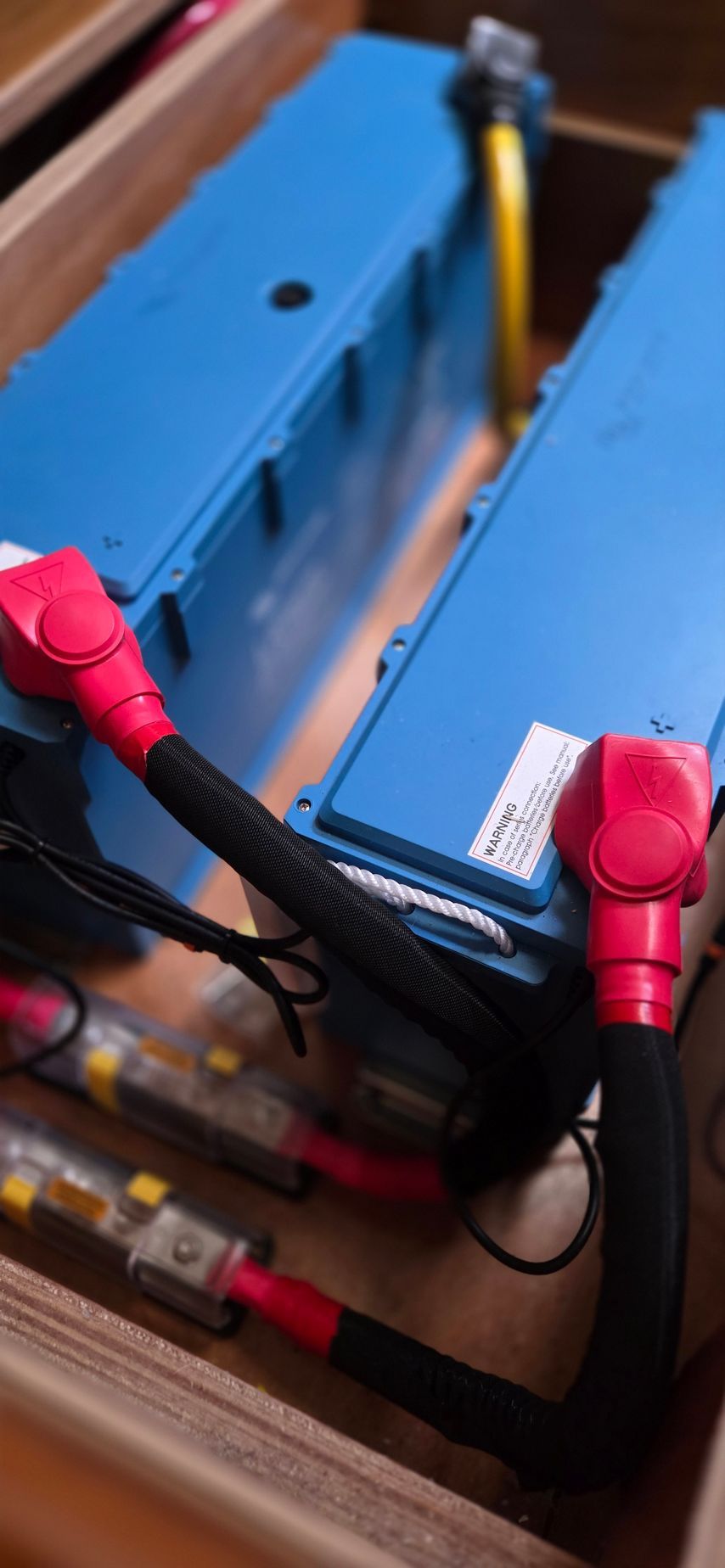
What Changes When You Switch to Lithium
The installation begins with a full evaluation of your charging sources, including the alternator regulator, solar panels if present, and shore power charger. In Boston, M.P. Marine Electrical and Electronics tests each component to confirm compatibility with lithium charging profiles. If your alternator runs an older fixed-voltage regulator, it may require an upgrade or external control module to prevent damage to the new battery bank.
After the upgrade, you will notice your batteries recharge in a fraction of the time, especially during short motoring sessions or while anchored with solar input. The usable capacity increases because lithium can be discharged deeper without harming the cells, and the voltage stays stable even under heavy loads like a refrigerator, chartplotter, and autopilot running simultaneously. Your boat will also sit higher in the water if you replaced a large lead-acid house bank, since lithium weighs roughly one-third as much for the same energy storage.
The system includes a battery management system that monitors cell health, balances charge distribution, and disconnects power if temperature or voltage limits are exceeded. This protects both the battery and your onboard systems. Remote monitoring integration is available if you want to track performance from your phone while the boat is docked, which is especially useful during the offseason or extended time away from the slip.
Questions That Come Up Before Upgrading
Boat owners in Boston often ask about alternator compatibility, installation time, and what happens to their existing wiring before committing to a lithium upgrade.
What happens to my existing alternator when I switch to lithium?
Your alternator may need a new external regulator, a DC to DC charger, or a programming update to match lithium charging profiles. M.P. Marine Electrical and Electronics tests your alternator output and makes adjustments during the evaluation so charging stays safe and efficient.
How does saltwater exposure in Boston affect lithium battery performance?
Because the batteries that we use are marine rated and completely sealed, saltwater does not directly affect the battery cells, but it accelerates corrosion on terminals and connections. Proper installation includes coating terminals, using marine-grade enclosures, and ensuring ventilation paths stay clear of moisture buildup.
Why does lithium require a battery management system?
The management system monitors each cell for voltage imbalances, overheating, or charging faults, and it disconnects power if any parameter falls outside safe limits. This prevents damage to the battery and protects your boat from electrical issues tied to improper charging.
What is the real usable capacity difference between lithium and lead-acid?
You can safely use eighty to ninety percent of a lithium battery's rated capacity without harming the cells, compared to about fifty percent with lead-acid. That means a smaller lithium bank can replace a much larger lead-acid setup and still provide more available power.
How much does a lithium battery upgrade cost"
Because every vessel’s power needs are unique, upgrade costs vary significantly. Entry-level systems for basic electronics or trolling motors typically range from a few hundred to a couple thousand dollars. Our most popular comprehensive upgrade for a 30-foot boat—including 200-400Ah of lithium batteries, inverter, and a touchscreen control—generally costs between $10,000 and $15,000. Larger, custom systems requiring advanced integration can start upwards of $25,000.
M.P. Marine Electrical and Electronics performs lithium upgrades at docks throughout Boston, so your boat does not need to leave the slip. If you want faster charging, more usable power, or lighter weight on board, reach out to schedule an evaluation.