
Hear Your Music Over the Water
Marine audio and entertainment system installation for boaters throughout Boston.
You want to listen to music while cruising through Boston Harbor, but your speakers cut out, sound distorted, or stop working after a season of saltwater exposure. Marine audio systems face harsher conditions than home stereos, and standard car speakers corrode quickly in saltwater environments. M.P. Marine Electrical and Electronics installs marine-grade speakers, amplifiers, and head units that deliver clear sound and hold up to the conditions you face on the water around Boston and surrounding areas.
A marine audio installation begins with selecting weather-resistant components rated for continuous moisture exposure and UV light. In Boston, where salt spray and humidity are constant, proper installation includes sealed speaker enclosures, corrosion-resistant wiring, and amplifier mounting in dry locations with adequate ventilation. M.P. Marine Electrical and Electronics evaluates your boat's layout, plans speaker placement for balanced sound throughout the cockpit and cabin, and integrates the system with your multifunction display if you want touchscreen control from the helm.
M.P. Marine Electrical and Electronics offers dockside audio upgrades throughout Boston for your convenience.
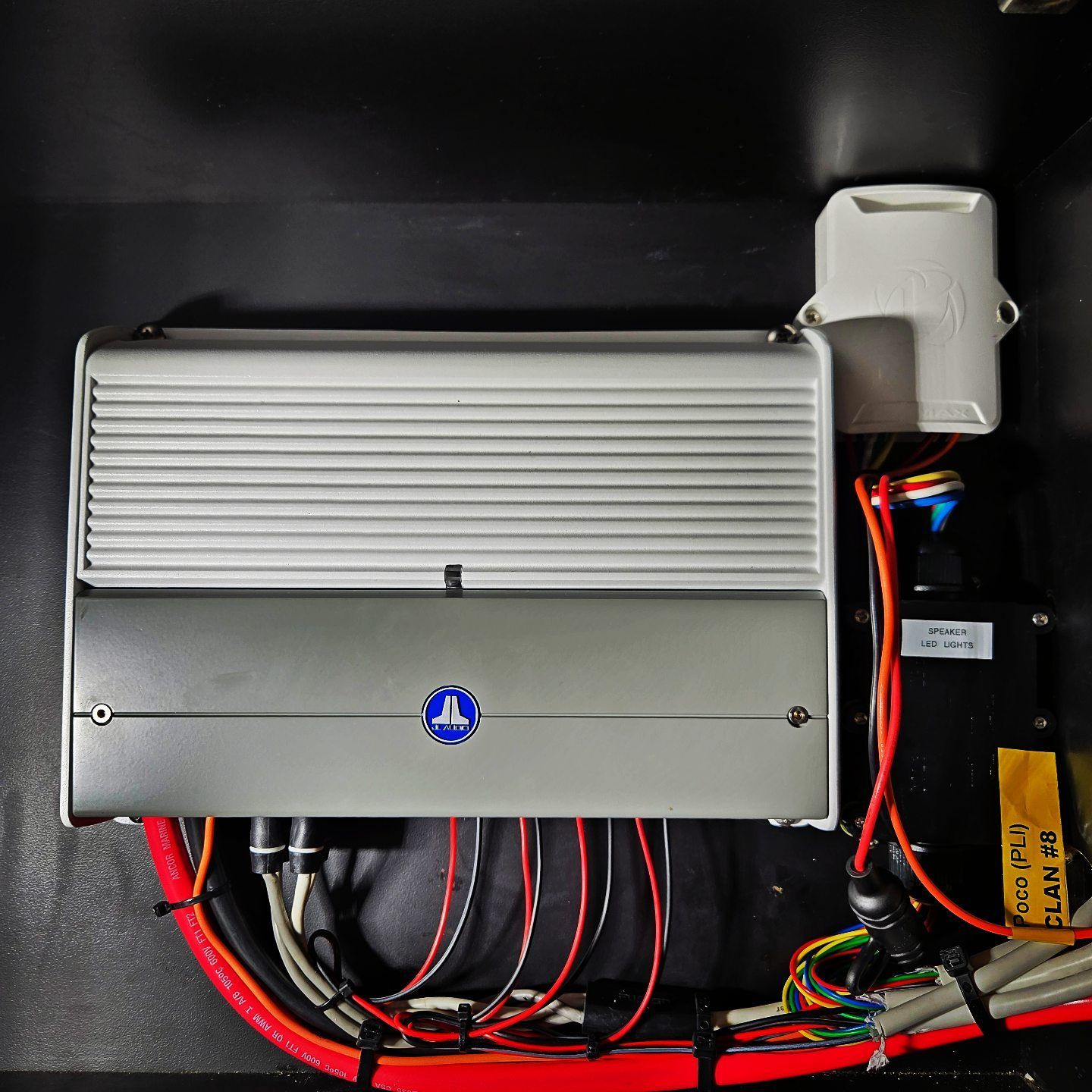
How Marine Audio Systems Are Built and Wired
The installation starts with mounting speakers in locations that provide good coverage without interfering with helm visibility or passenger movement. M.P. Marine Electrical and Electronics uses marine-grade speakers with sealed cones and rubber surrounds that resist water intrusion, and runs tinned copper wire to prevent corrosion at connection points. In Boston, amplifiers are typically installed below deck or in sealed compartments to protect them from direct water exposure while allowing airflow to prevent overheating.
After installation, you will hear balanced audio throughout the boat without distortion at higher volumes, and the system will continue working season after season without speaker failure or wiring corrosion. If you previously struggled to hear music over engine noise or wind, a properly sized amplifier and well-placed speakers will deliver clear sound without needing excessive volume. Your audio system can also connect to your phone or multifunction display via Bluetooth, allowing you to control playback without leaving the helm.
Custom speaker placement accounts for seating areas, sun pads, and cabin spaces, so you hear consistent sound quality wherever you spend time on the boat. M.P. Marine Electrical and Electronics configures amplifier settings to match speaker impedance and power handling, preventing blown speakers or overheated amplifiers. The system can also integrate with onboard lighting and control panels if you want centralized management of audio and other accessories.
Questions Boaters Have About Marine Audio
Boat owners in Boston often want to know why standard car speakers fail on boats, how to prevent corrosion, and what kind of amplifier power is needed before upgrading their audio system.
Why do car speakers fail when installed on a boat?
Car speakers are not designed for constant moisture exposure, and their paper cones and foam surrounds absorb water and deteriorate quickly in saltwater environments. Marine speakers use sealed enclosures and synthetic materials that resist water damage and UV degradation.
How much amplifier power do I need for my boat?
Amplifier power depends on the number of speakers, speaker efficiency, and how much background noise you need to overcome. Most cockpit setups with four to six speakers work well with a fifty to one hundred watt per channel amplifier, while larger vessels with cabin speakers may require additional zones and more power.
What causes speakers to sound distorted at high volume?
Distortion usually results from underpowered amplifiers being pushed too hard, mismatched speaker impedance, or damaged speaker cones. M.P. Marine Electrical and Electronics matches amplifier output to speaker ratings and tests the system at operating volume to ensure clean sound without clipping.
How does Bluetooth connectivity work with marine audio systems?
Most marine head units and amplifiers include built-in Bluetooth that pairs with your phone, allowing you to stream music and control playback wirelessly. Some systems also integrate with multifunction displays so you can manage audio from the same touchscreen you use for navigation.
How do I prevent corrosion on speaker terminals and wiring?
Proper installation uses tinned copper wire, heat-shrink connections, and dielectric grease on all terminals. M.P. Marine Electrical and Electronics seals connections inside speaker enclosures and avoids exposed wire runs that collect moisture and salt spray.
M.P. Marine Electrical and Electronics installs marine audio systems throughout Boston, including weather-resistant speakers, amplifiers, and integrated control setups. If your current system sounds weak or has failed due to corrosion, contact us to discuss replacement options and dockside installation.