
How to Keep Boat Batteries Charged on a Mooring (Why Solar is Mandatory)
If your boat spends its weekdays swinging on a mooring, you know the feeling. You pack the cooler, shuttle down on the yacht club dinghy, step aboard on a beautiful Saturday morning, flip the main battery switch, and… click.
Nothing. The bilge pumps are lethargic, your chartplotter is screaming a low-voltage alarm, and your weekend plans are officially dead in the water.
There is a segment of the boating community that treats marine solar panels like a luxury reserved exclusively for hardcore blue-water cruisers or off-grid liveaboards. I’m here to give you a dose of professional reality: If you keep your boat on a mooring, solar isn't an upgrade. It is a mandatory piece of baseline infrastructure. Let's look at why leaving a mooring-bound boat reliant strictly on an engine alternator is a recipe for battery destruction, how it violates the core intent of marine safety standards, and how a properly executed solar integration keeps your vessel smart, safe, and efficient.
The Mooring Dilemma: Chronically Starved Marine Batteries
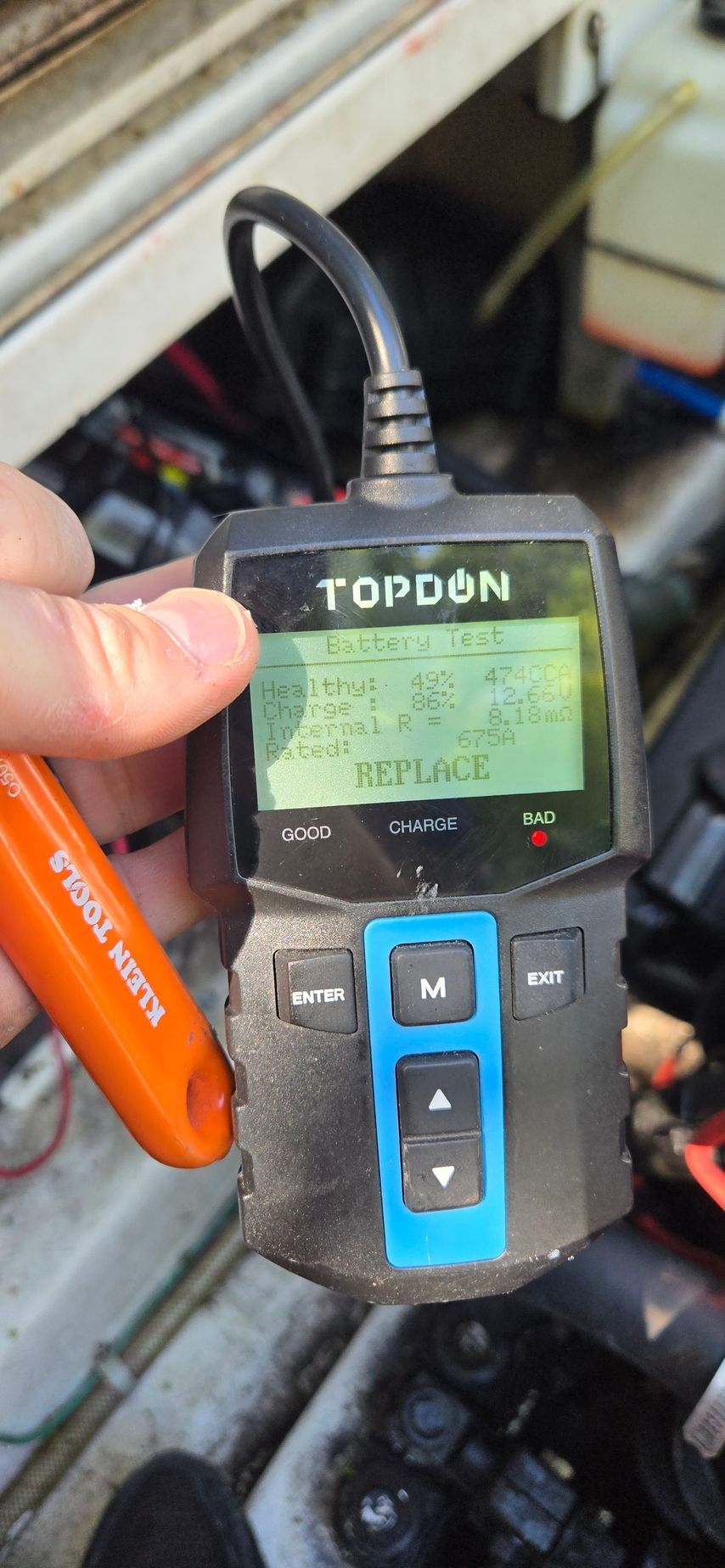
Here is a provocative industry truth that alternator manufacturers don't want to scream too loudly: Your boat stock, engine alternator is a terrible battery charger. Alternators are fantastic at putting out high current to bulk-charge a depleted bank right after cranking, but they completely lack the smart, multi-stage charge profiles needed to push a lead-acid, AGM, or even a lithium battery through its slow, final absorption phase.
When a boat sits on a mooring, it experiences a constant, silent drainage. Between automatic bilge cycle tests, stereo memory retention, clocks, and hidden parasitic digital networks, your battery bank is under perpetual attack.
If you let your boat sit at 50% to 60% capacity from Monday to Friday, you are executing a slow death penalty via sulfation. Hard crystals form on the internal lead plates, permanently destroying the battery's capacity. When you finally fire up the engine on Saturday morning for a short 20-minute run to your favorite anchorage, you aren't doing a fraction of what is needed to undo that damage. You are trapped in a cycle of chronic undercharging.
Enter the Hero: Solar as a Maintenance and Topping Source
Adding solar power to a mooring-bound boat completely flips the script. You don't need a massive, unsightly stainless-steel arch filled with rigid residential panels just to keep your batteries healthy (though if you want an off-grid lithium powerhouse, we can certainly design one).
Even a modest, high-efficiency solar array paired with a smart, multi-stage Maximum Power Point Tracking (MPPT) charge controller ensures that your boat spends all week sitting in Float mode.
While you are sitting at your office desk on a Tuesday afternoon, the sun is quietly and perfectly executing the hours-long absorption and float cycles that your engine alternator can't handle. You arrive on Saturday to a bank sitting at a crisp 100% state-of-charge, ready to power your DC refrigeration all weekend long.
Cheap Amazon Panels vs. True Marine-Grade Equipment
Let’s address a dangerous temptation: buying a cheap, generic online solar kit intended for an RV or a backyard shed. The marine environment is fundamentally hostile. Salt spray, constant pounding from waves, heavy UV exposure, and people literally stepping on your equipment will destroy land-based panels in months.
When outfitting a mooring-bound vessel, you must look for hardware specifically engineered to survive the coastline. I highly recommend taking a look at Custom Marine Products. They specialize exclusively in top-tier marine solar solutions designed for the realities of life on the water.
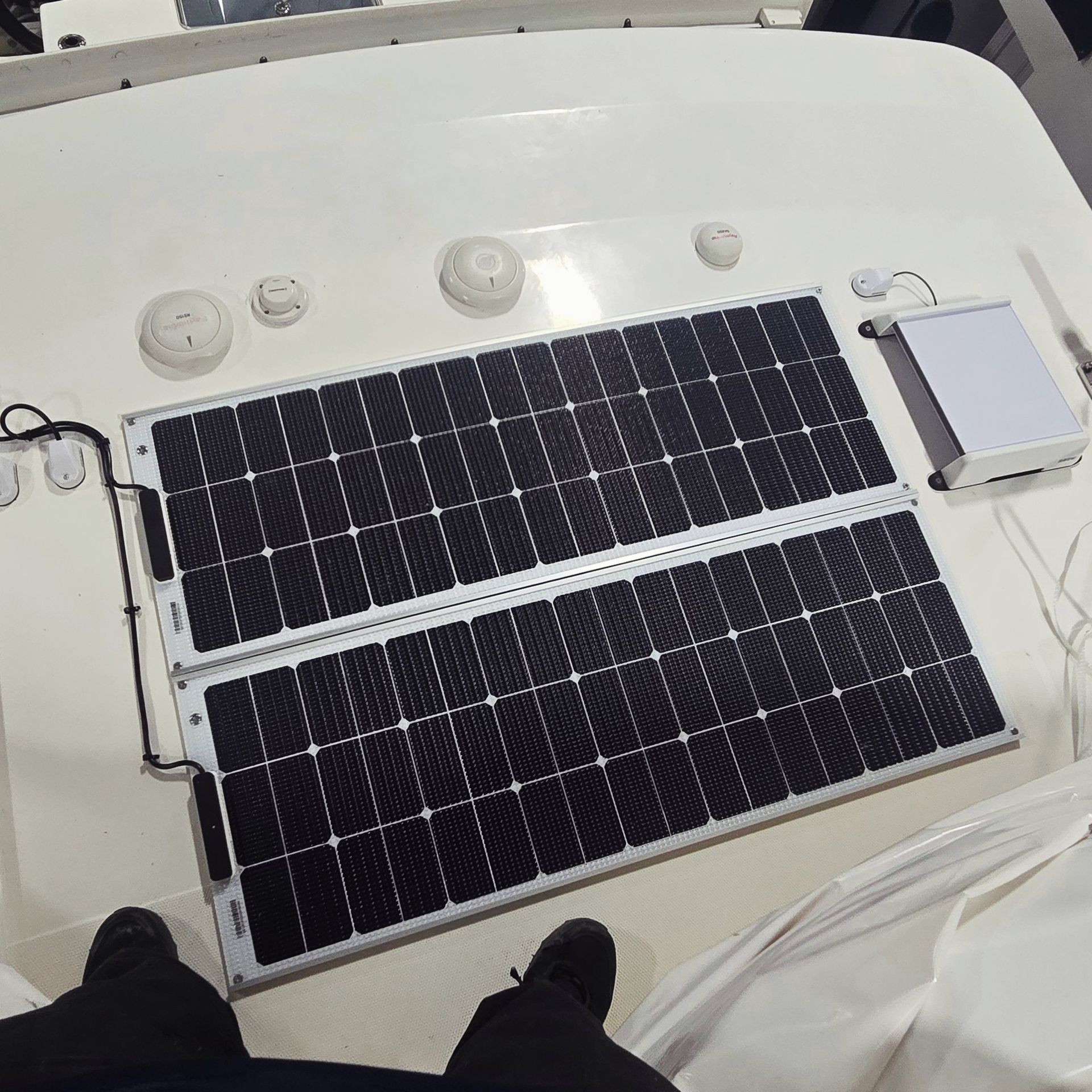
Unlike standard panels that drop their output entirely if a single cell is covered by a shadow (like a rogue shadow from your boat’s mast or boom), Custom Marine Products utilizes advanced bypass-diode integration and high-efficiency SunPower monocrystalline cells. This ensures that even when your boat swings into a partially shaded angle on its mooring, the array continues to pump juice into your batteries. From rugged walk-on panels that glue down to your fiberglass deck to ultra-lightweight flexible panels that zip cleanly into your bimini canvas, using marine-specific hardware prevents premature system failure and keeps your decks clean.
Doing Solar Right: Technical Standards You Can't Ignore
Installing solar on a boat isn't as simple as buying a panel, taping down the wires, and running them raw into the boat. Marine environments are brutal, and improper DC wiring is a primary cause of onboard fires.
When M.P. Marine installs or consults on a solar system, we strictly adhere to ABYC E-11 (AC and DC Electrical Systems on Boats) standards. Here are a few technical mandates that cannot be bypassed:
- Overcurrent Protection (Fusing): Per ABYC E-11, every ungrounded current-carrying conductor must be protected by a fuse or circuit breaker. Your solar controller output must be properly fused within 7 inches of the battery connection (or up to 40 inches if the wire is fully enclosed in a protective sheath) to protect the wire from melting down if a short-circuit occurs.
- The Voltage Drop Standard: Marine solar arrays can experience sharp performance losses if the run from the deck to the battery locker uses thin, non-tinned wire. High voltage drop means your smart MPPT controller receives inaccurate data about your battery's true voltage, leading to undercharging. We use heavy-gauge, tinned-copper marine wiring to keep resistance minimal.
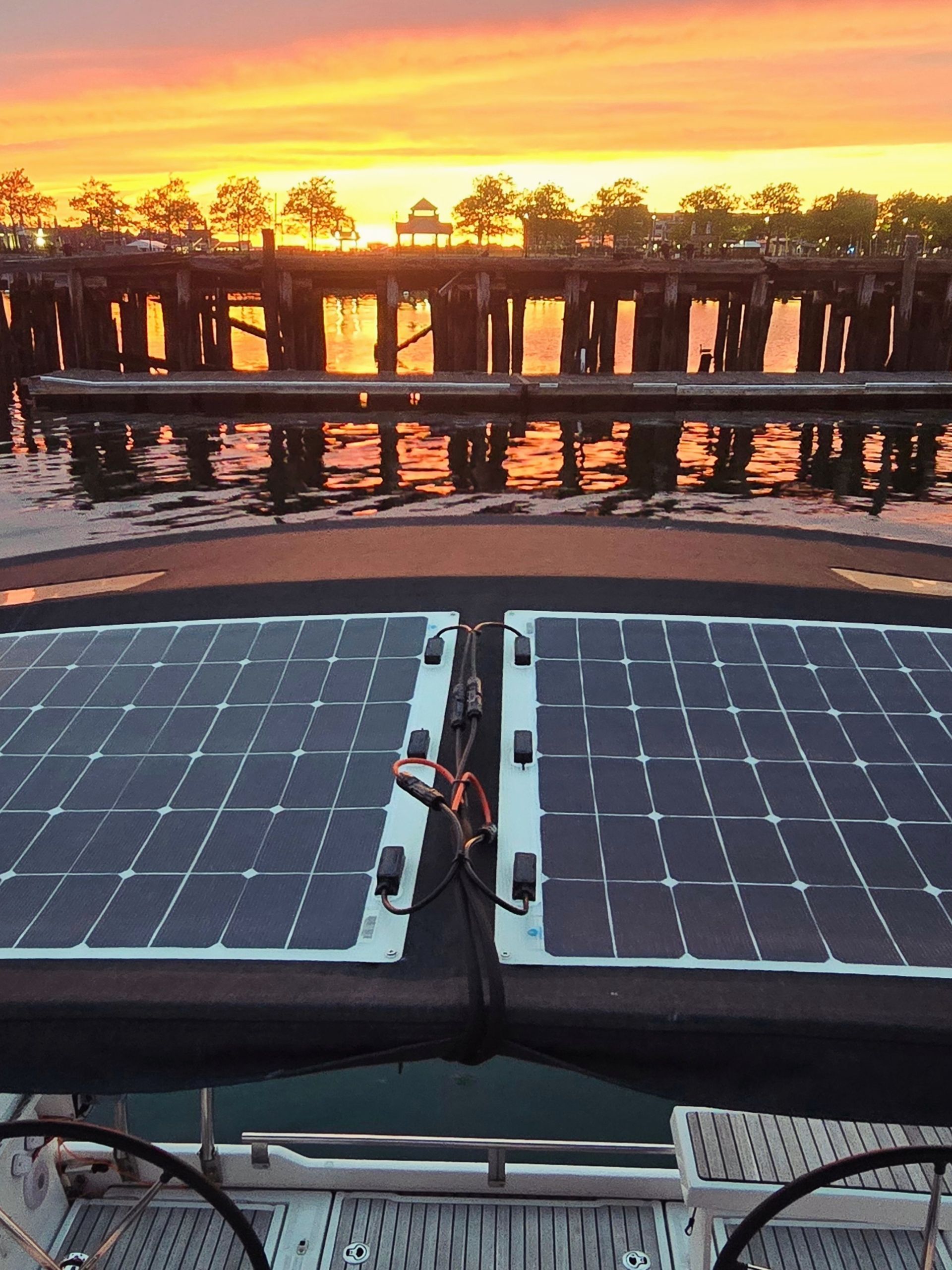
- The Marine Isolation Requirement (Dual MPPTs for Shading): While not explicitly codified as a single rule, ABYC guidelines underscore system reliability and minimizing thermal risks. If you connect panels in series on a boat, a single shaded cell drops the voltage of the entire string, forcing the MPPT controller to stop charging. For boats swinging on moorings under a rig, we isolate the panels by wiring them in parallel or using independent MPPT controllers, ensuring one shaded panel doesn't drag down the entire system's efficiency.
The Bottom Line: Protect Your Investment
Marine batteries are too expensive to replace every two seasons because they starved to death on a mooring. A properly integrated solar system pays for itself by doubling or tripling the lifespan of your battery investment, all while offering you absolute peace of mind that your bilge pumps have the power they need to keep your investment afloat mid-week.
Don't let a dead battery hijack your next weekend on the water.
⚓ Ready to Stop Playing Battery Roulette?
If you're tired of stepping onto a dead boat or wondering if your bilge pumps have enough juice to survive the next coastal storm, let's fix it the right way. At M.P. Marine Electrical & Electronics, we specialize in high-quality marine electrical upgrades, sourcing trusted components from world-class brands like Victron Energy, Blue Sea Systems, and Custom Marine Products.
Whether you need a sleek, flexible solar array sewn into your canvas or a complete multi-stage off-grid charging overhaul, we design smart systems that remove the guesswork.