
Mastering Marine Electrical: A New England Boater’s Guide to Safe & Compliant Wiring
By Mike Parrish
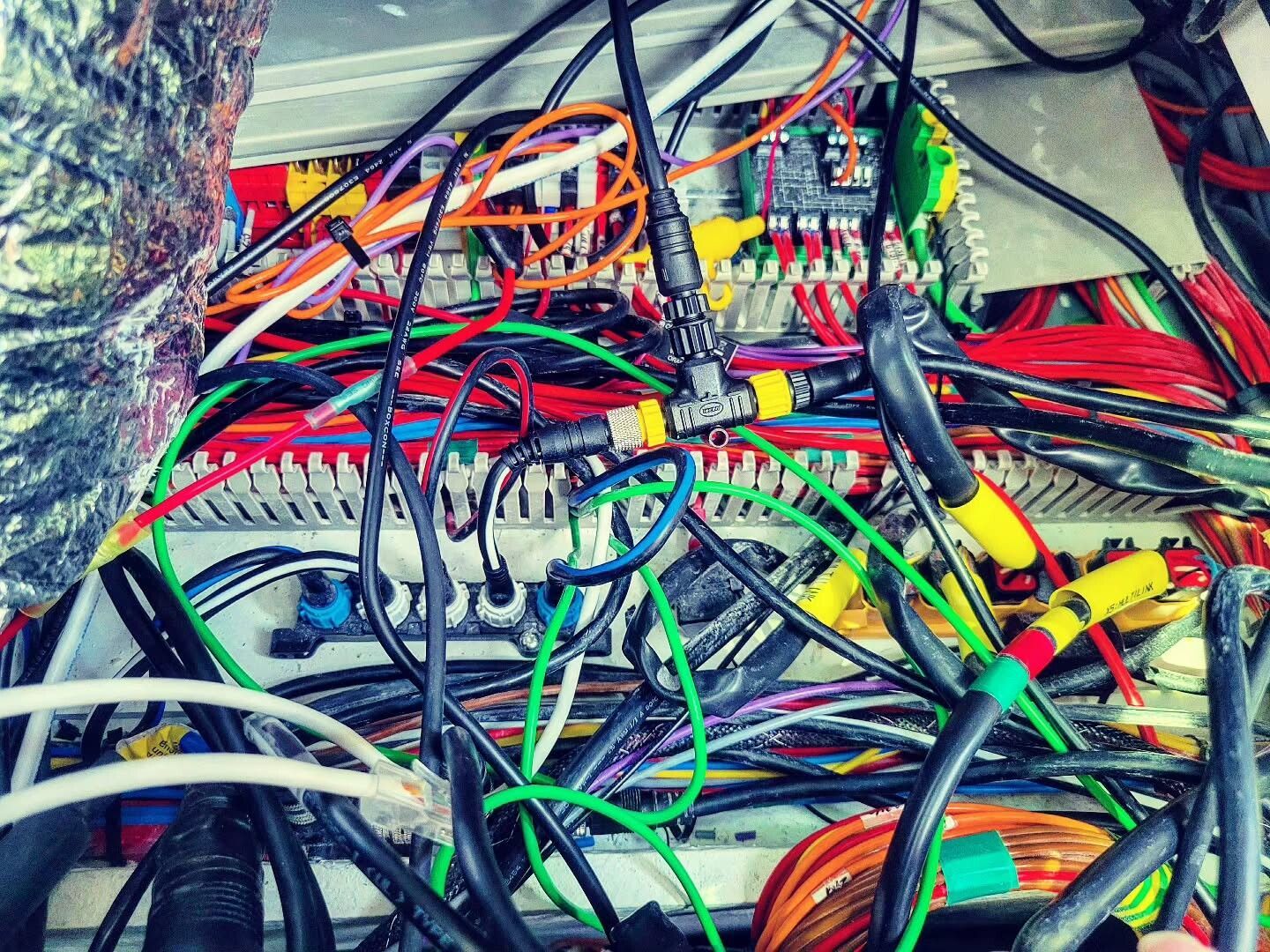
Whether you’re retrofitting an offshore cruiser berthed in Constitution Marina, tuning up a center console in Boston Harbor, or preparing a sailboat for a run down to the Islands, your electrical system is your boat’s life support.
In the rugged, salty environment of New England, a "creative" electrical job won't just fail—it can lead to stray-current corrosion, battery bank destruction, electrical fires, or sudden power loss in the middle of the President Roads shipping channel.
At M.P. Marine Electrical & Electronics, our ABYC-certified technicians see everything from dangerous home-hardware hacks to misconfigured lithium setups. We’ve written this comprehensive guide based on American Boat & Yacht Council (ABYC) standards and Victron Energy engineering principles to help Boston boaters do the job right.
1. Battery System Security & Thermal Safety
Batteries are massive, dense energy storage units filled with corrosive chemicals or high-density lithium cells. Don't wait until you're in the rough chop off Deer Island or heavy swells of Stellwagen Bank to test your battery installation limits.
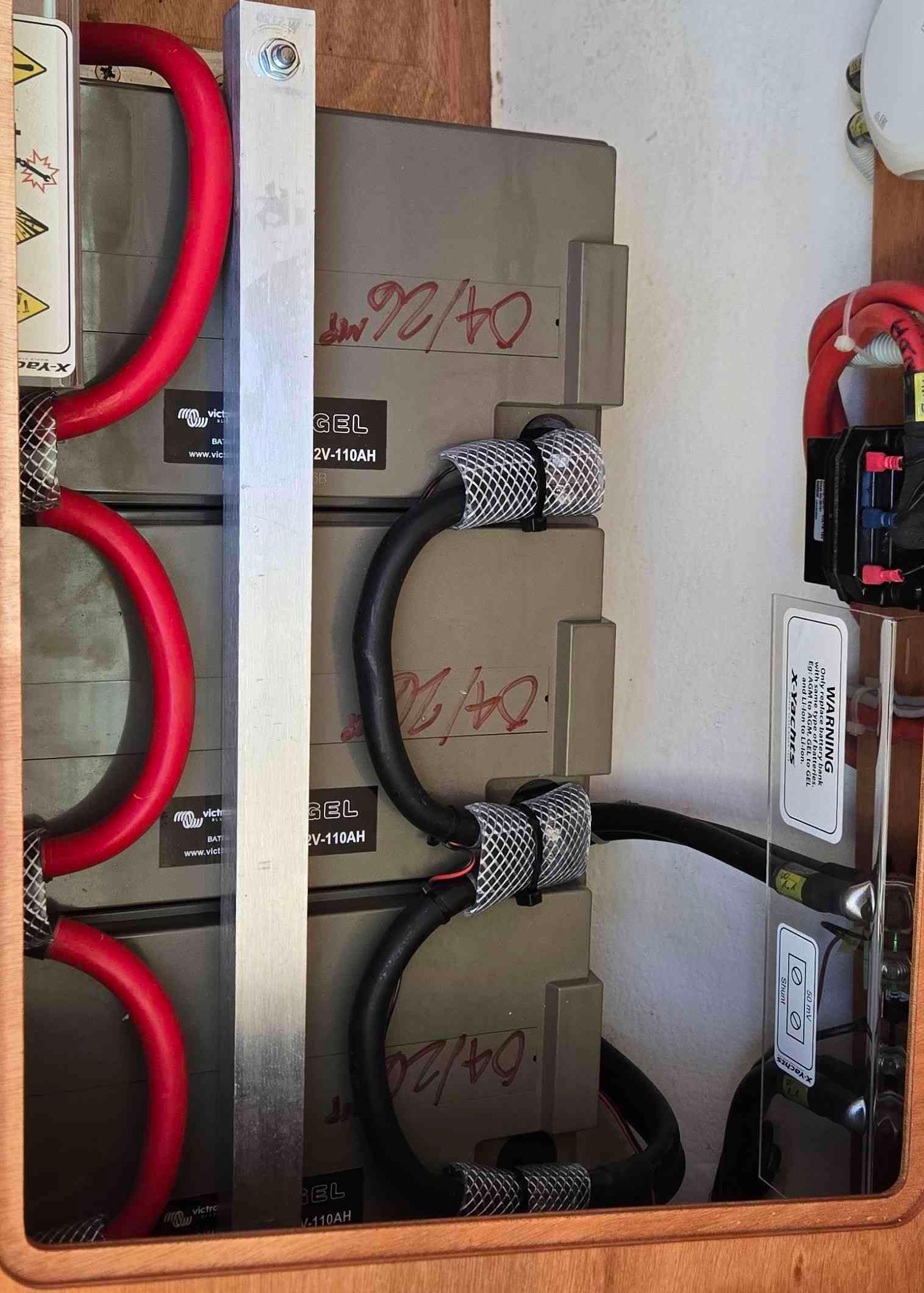
Key Installation Rules
- The 2x Weight Rule (ABYC E-10): Battery securing systems must hold the battery firmly so it moves less than 1 inch (25mm) in any direction when subjected to a force equal to twice the battery’s weight for one minute.
- Liquid Containment: Lead-acid batteries must sit in liquid-tight, acid-resistant trays or battery boxes to prevent electrolyte spills from eating through your bilge or stringers.
- Terminal Booting: Every ungrounded ("hot") positive terminal must be fitted with a flexible, non-conductive boot or enclosed in a covered box. A dropped socket wrench across open terminals will trigger massive arcing and immediate fire hazard.
- Prohibited Proximity: Never install batteries directly under fuel lines, fuel filters, or primary fuel valves.
2. Marine Wiring & Environment-Proof Connections
Boston Harbor’s salty ocean air and high humidity are relentlessly corrosive to electrical conductors. Standard residential or automotive wiring hardware will degrade rapidly on a boat.
Marine Wiring Best Practices
- Say NO to Hardware Store Wire Nuts: Twist-on wire nuts rely on spring tension that easily vibrates loose in marine hulls. ABYC E-11 strictly bans wire nuts. Always use marine-grade tinned copper conductors fitted with adhesive-lined heat-shrink crimp ring terminals.
- Tinned Copper is Mandatory: Plain copper wire corrodes quickly when exposed to salt atmosphere, turning into green powder that breaks electrical continuity. Tinned copper wire resists black-rot corrosion.
- 18-Inch Support Rule: Secure wire bundles every 18 inches (450mm) using non-metallic wire ties, cushioned stainless loom clamps, or enclosed raceways.
- Thermal Separation: Keep wire runs at least 2 inches (50mm) away from water-cooled engine exhausts and 9 inches (225mm) away from dry exhaust components.
3. The "Round-Trip" Rule & Calculating Wire/Fuse Sizes
Sizing wire on a boat isn't just about preventing heat; it's about minimizing Voltage Drop. Low voltage causes nav-lights to dim, radar systems to reboot unexpectedly, and bilge pumps to burn out prematurely.
Step-by-Step Circuit Sizing Formula
Step 1: Calculate Total Amps
Find the total wattage of the device and divide by system voltage.
AMPS = WATTS/VOLTS
Example: A 180-Watt searchlight running on a 12V system draws 15 Amps (180/12 = 15).
Step 2: Calculate "Round-Trip" Distance
Electric current must travel from the power source to the device AND BACK AGAIN.
TOTAL CABLE RUN LENGTH = ONE-WAY DISTANCE X 2
Step 3: Select Gauge Based on Voltage Drop
- 3% Max Drop: Critical loads (Navigation electronics, VHF, bilge pumps, engine circuits).
- 10% Max Drop: Non-critical loads (Cabin lights, stereo, baitwell pumps).
Use ABYC E-11 Wire Sizing tables using your Amps and Round-Trip Distance to choose the proper AWG wire thickness.
Step 4: Choose & Place Overcurrent Protection (Fuses / Breakers)
Crucial Rule: Fuses protect the wire, NOT the appliance!
Select a fuse rated above the device’s normal operating current, but below the maximum safe current-carrying capacity (ampacity) of your chosen wire.
Fuses must be located within 7 inches (175mm) of the power source. If the wire is enclosed in a protective sheath or conduit, this distance can be extended up to 40 inches (1m).
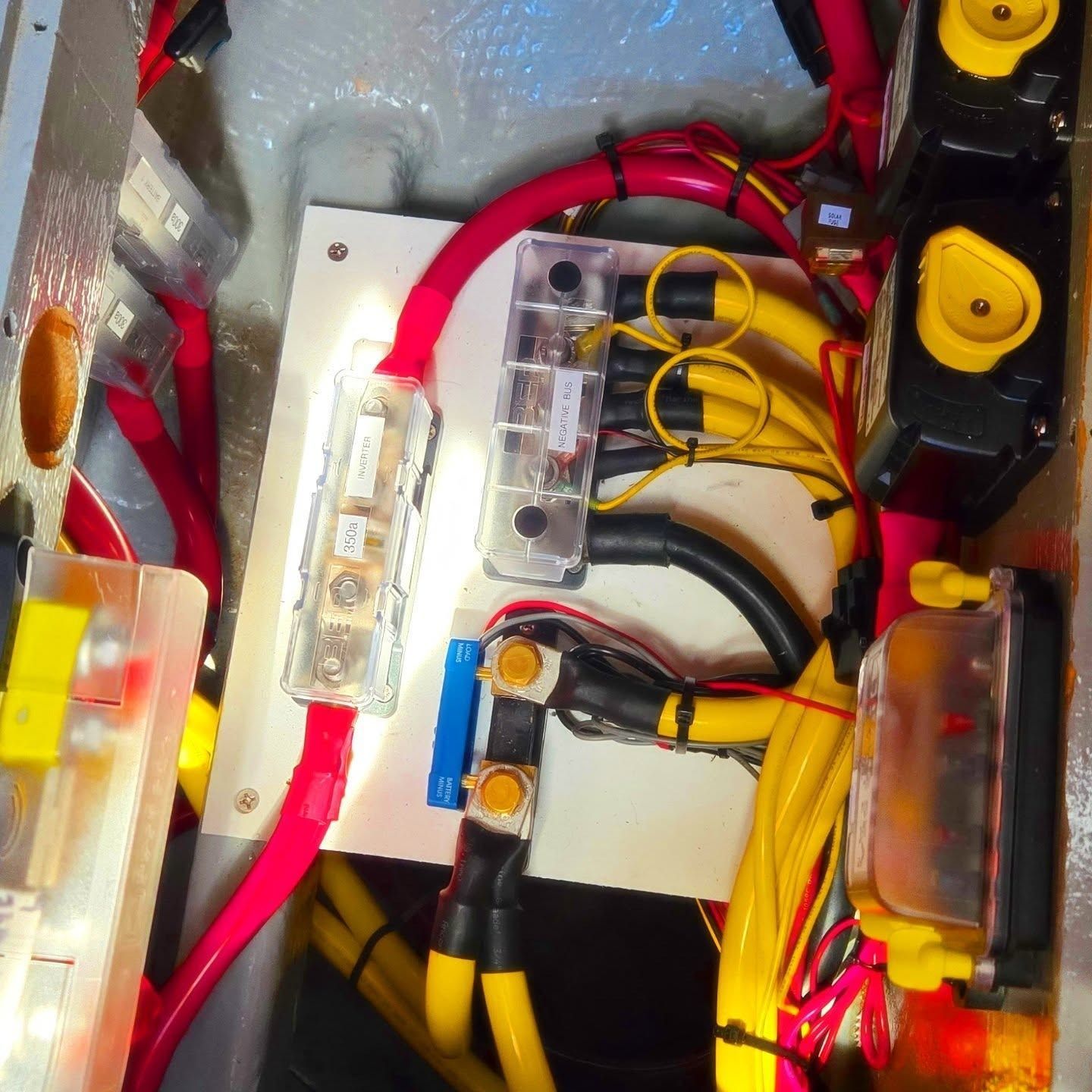
4. Advanced Battery Bank Balance (Victron Engineering)
When connecting multiple 12V batteries in parallel to boost capacity (Amp-Hours), improper wiring causes the battery closest to the charger to do all the work, leading to premature bank failure.
- The "Opposite Corners" Rule: Always attach your system's main Positive supply cable to the first battery in the parallel chain, and the main Negative supply cable to the last battery in the chain. This forces electrical current to flow evenly through every battery in the bank, balancing internal resistance and extending overall battery lifespan.
- Terminal Stacking Limit: ABYC standards state that no more than 4 terminal ring lugs may be stacked on a single terminal stud or bolt. If you need additional connections, install a high-amp busbar.
5. Shore Power Safety & Galvanic Protection in New England Saltwater
Plugging into shore power at a local marina brings 120V AC power onto your boat—and introduces real risks if safety protocols aren't followed.
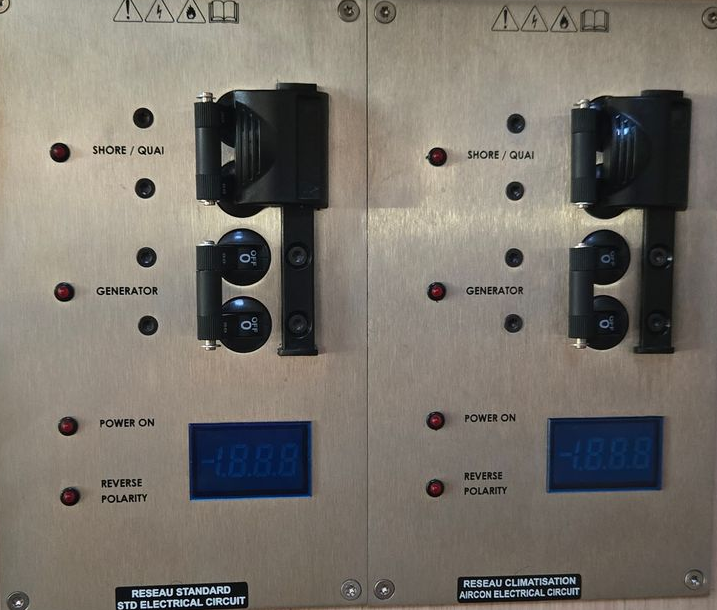
- Galvanic Corrosion: Connecting your boat's green AC grounding wire to the dock's ground links your underwater metal fittings (shafts, props, thru-hulls) to neighboring boats. Minor voltage differences create a natural battery, dissolving your zinc anodes rapidly and attacking underwater metals.
- The Solution: Install a Galvanic Isolator or an Isolation Transformer on your AC green ground wire. This blocks low-voltage DC corrosion currents while preserving critical AC safety grounding.
- AC/DC Grounding Link: Your boat’s AC safety ground must connect to the DC grounding bus at
one single point on the boat to prevent shock hazards ("hot skin" boat syndrome).
6. Upgrading to Lithium (LiFePO4) for New England Boating
Lithium Iron Phosphate (LiFePO4) offers twice the usable energy at half the weight—an incredible upgrade for cruising the coast. However, lithium batteries are not simple drop-in replacements.
Essential Requirements for Marine Lithium (ABYC E-13)
- Mandatory BMS: A Battery Management System (BMS) must actively control the bank. It monitors cell voltages and temperatures, disconnecting the system before thermal runaway, cell collapse, or shorting occurs.
- Alternator Overheat Protection: Lithium batteries draw maximum current rapidly due to low internal resistance. A standard marine engine alternator will run at 100% capacity until its internal diodes overheat and melt. You must install a smart DC-to-DC charger or an external multi-stage voltage regulator to throttle alternator current.
- Freeze Protection for New England Winters: Charging a lithium battery below $32^\circ\text{F}$ ($0^\circ\text{C}$) permanently damages cell chemistry (lithium plating). If you keep your boat in the water during shoulder seasons or lay up in local yards, your system needs low-temperature charge cutoffs or integrated internal heating pads.
The Fine Print: Safety & Compliance
Disclaimer: Marine electrical standards (including ABYC E-11, E-10, A-31, and E-13) consist of hundreds of detailed engineering requirements. This guide highlights essential DIY best practices and critical safety concepts, but it is not an exhaustive rulebook. Incorrectly designed electrical systems carry significant risks of fire, stray-current corrosion, and shock hazard.
Need Expert Marine Electrical Support in Boston?
Whether you need a full electrical system redesign, a custom lithium conversion, an AC/DC panel upgrade, or troubleshooting for a persistent battery drain, M.P. Marine Electrical & Electronics is here to help.
Our team brings certified expertise directly to your dock, slip, or winter yard across Boston Harbor and the surrounding New England coastal communities.
Services We Provide: Custom System Design, ABYC Compliance Audits, Lithium (LiFePO4) Upgrades, Solar & Victron Integration, NMEA2000 Electronics Installations, and Troubleshooting.
Got a complex project or a wiring question? Click the link below to talk to us today!