The Smart Vessel Revolution: How Remote Monitoring Saves Your Boat (and Your Sanity)
By Mike Parrish
Every boat owner knows that unique, lingering knot in the pit of their stomach. It hits right when a sudden Nor'easter rolls into Boston Harbor, or when you’re stuck at the office during a scorching July heatwave.
Did the shore power breaker trip? Is the cabin air conditioner off, turning the fridge into a warm science experiment? Did the high-water alarm trigger while I'm an hour away?
In the past, the only cure for "dock anxiety" was driving down to the marina at 10 PM in the pouring rain to check your lines and bilge. Today? You can monitor, control, and secure your vessel directly from your smartphone.
At M.P. Marine Electrical & Electronics, we believe that boat ownership should bring peace of mind, not middle-of-the-night panic. Let’s dive into how modern remote monitoring and digital switching systems eliminate uncertainty, safeguard your investment, and simplify your time on the water.
What Can Remote Monitoring & Control Actually Do?
Modern telematics and digital monitoring systems act as a 24/7 digital watchkeeper for your vessel. By deploying smart sensors throughout your boat, critical telemetry is streamed directly to your mobile device.

1. Bilge Pump Activity & High-Water Alarms
A running bilge pump isn't always a crisis, but a bilge pump that runs continuously is a disaster in progress. Remote monitoring tracks pump cycle counts and run times. If a pump activates too frequently—or if a secondary high-water switch triggers—you receive an immediate push alert before the water reaches your battery banks.
2. Shore Power & AC Grid Health
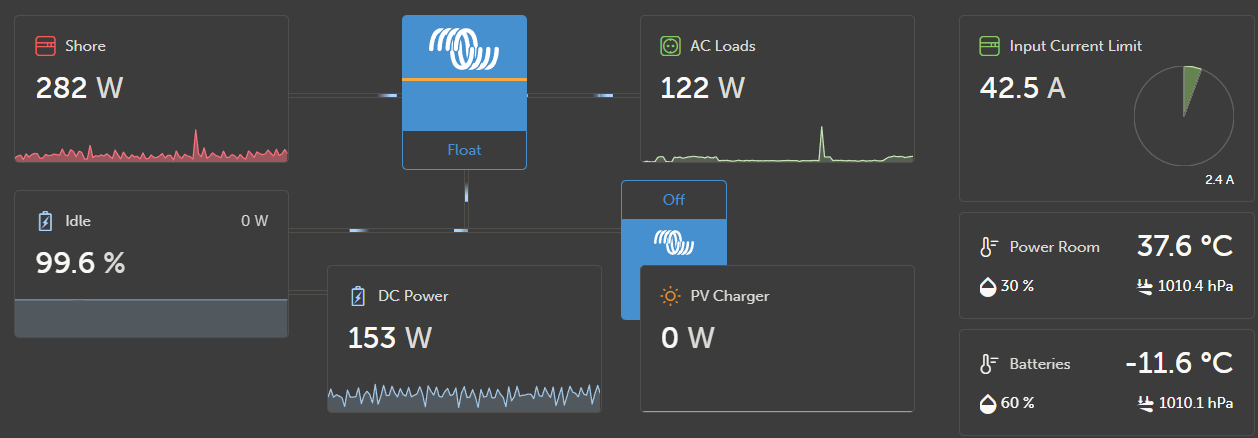
Shore power pedestals at busy New England marinas are notoriously fickle. A tripped pedestal breaker cuts off your battery chargers and air conditioning. Remote monitoring notifies you the second AC line voltage drops, allowing you to intervene long before your DC house bank is drained.
3. Battery Bank Voltage & State of Charge (SoC)
Monitoring simple open-circuit voltage can be deceiving. Advanced remote systems interface directly with smart shunts (like Victron Energy's SmartShunt) to track true State of Charge (SoC), current draw, and voltage. Whether you run AGM or a high-performance Lithium-Ion house bank, you’ll know your exact power budget.
4. Security & Geofencing
Set a digital anchor watch or perimeter fence around your slip. If your boat moves outside its designated GPS boundary—or if entry-door sensors detect unauthorized access—high-decibel audible alarms trigger while sending instant security notifications to your phone.
5. Environmental & Cold-Storage Monitoring
There is nothing quite like opening your galley freezer after five days away to find spoiled catch and melted ice cream. Wireless thermal sensors monitor interior temperatures in refrigeration units and engine spaces, warning you of thermal spikes before costly spoilage occurs.
6. Tank Level Sensing
Fluid levels for fresh water, black water, and fuel can be read remotely. You'll know if you need to schedule a pump-out or fuel burn before ever setting foot on the dock.
7. Remote & Scheduled Switching
Want to arrive at a well-lit, pre-cooled boat? Remote switching lets you turn on courtesy lights, cabin AC, or refrigeration from your driveway. Integrated systems can even facilitate remote generator start/stop sequences with full safety interlocks.
Technical Compliance Tip: Under ABYC E-11 and A-31 standards, battery monitoring circuits and high-water sensor wiring must utilize properly rated marine-grade tinned copper conductor cables (UL 1426) with correct circuit protection placed near the DC source to prevent fire hazards.
Digitizing Systems: Bringing It All to the Helm
Having ten different smartphone apps for ten different onboard gadgets isn't modern—it's chaotic. The real magic happens when you unify these individual systems into a centralized digital switching network
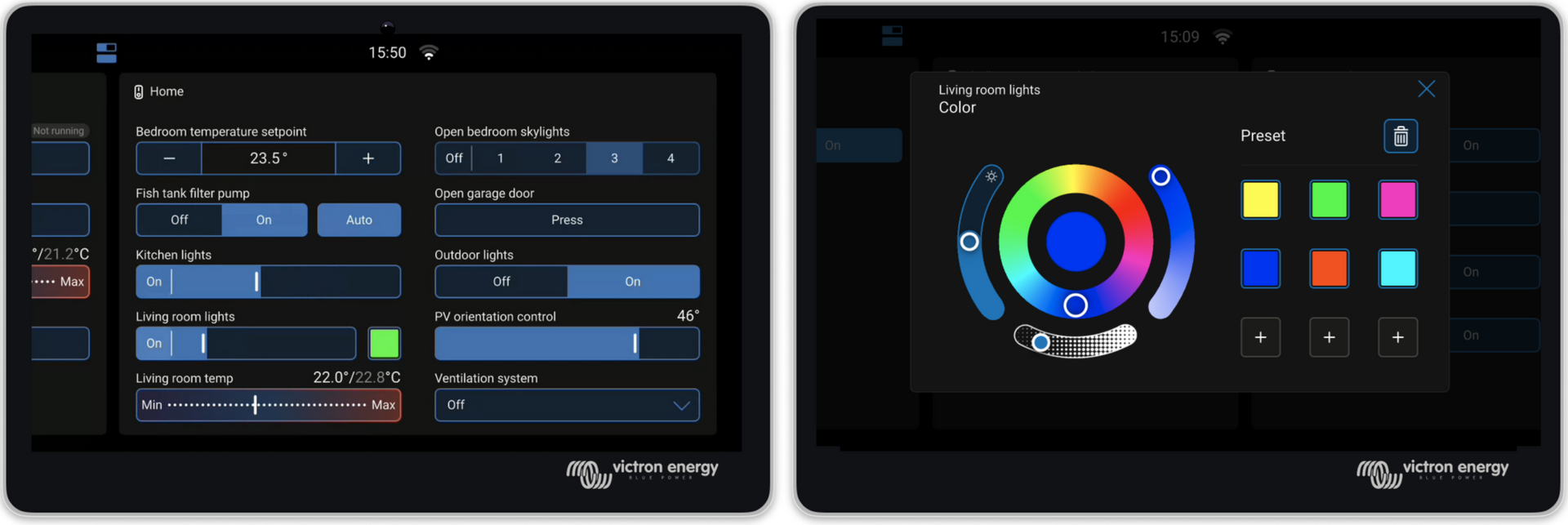
By transitioning away from traditional, bulky mechanical breaker panels to digital control modules (utilizing platforms like CZone, Garmin BoatSwitch, or Siren Marine), every relay, sensor, and circuit communicates over an NMEA 2000 backbone.
Why Digital Integration Changes Everything
- Single-Glass Helm Control: View battery state-of-charge, tank levels, bilge status, and switching controls directly on your main Multi-Function Display (Garmin, Raymarine, Simrad, Furuno).
- Automated Modes: Program custom digital "Modes." Pressing an "Exit Vessel" button can turn off non-essential loads, engage geofencing security, arm high-water alarms, and set cabin climate to eco-mode.
- Reduced Weight & Complexity: Replaces heavy copper wiring harnesses with a streamlined NMEA 2000 backbone, improving reliability and simplifying system troubleshooting.
The M.P. Marine Take: Don't Buy "Gadgets"—Invest in System Integration
Here is our honest (and slightly provocative) take: A remote monitoring system is only as reliable as the electrical installation backing it up.
Too often, boaters buy off-the-shelf smart modules, splice them into 15-year-old corroded wiring with cheap automotive crimps, and wonder why they get false alarms at 2 AM. If your base DC system suffers from severe voltage drops or improper fusing, adding "smart" tech is just putting digital band-aids on analog friction.
At M.P. Marine, we don't just "plug in box." We design fully integrated digital ecosystems. Every installation comes complete with custom wiring diagrams, ABYC-compliant circuit protection, tinned copper wiring, and complete owner orientation.
Ready to Make Your Vessel Smarter & Safer?
Whether you dock in Boston Harbor, Marblehead, or anywhere along the South Shore, let M.P. Marine Electrical & Electronics take the stress out of your boating season. From Lithium-Ion battery conversions and NMEA 2000 digital switching to full telematics and remote monitoring packages, our team delivers clean, reliable, professional installations tailored to your vessel.